PrimeCal Calendar Events Get v2
primecal_calendars_events_get_v2 reads a single event by id using the shared v2 event mapping layer.
Request Parameters
| Field | Type | Required | Notes |
|---|---|---|---|
eventId | number | Yes | Event identifier. id is accepted as an alias. |
verbosity | string | No | compact or full. Default full. |
fields | string[] | No | Extra fields to include on top of the default verbosity payload. |
userTimezone | string | No | Optional logical timezone override, used for timezone and startsAtLocal / endsAtLocal. Falls back to the caller's profile timezone, then UTC. Timed values still return UTC Z timestamps in startsAt / endsAt. |
Compact Response
Compact mode includes:
idtitlestartsAt/endsAtfor timed eventsstartsAtLocal/endsAtLocal— the same instants as ISO 8601 with a numeric UTC offset (e.g.+02:00) in the resolved timezone; for all-day events,startsAtLocal/endsAtLocalarestartDate/endDateat local midnightstartDate/endDatefor all-day eventsallDaylocationtimezonecalendarIdcalendarNameattendeeCountorganizerNamemeetingUrlsourceIdexternalId
Full Response
Full mode adds heavier fields by default:
descriptionattendeesorganizerrecurrenceTyperecurrenceRuleinstanceDatecreatedAtupdatedAtreminders
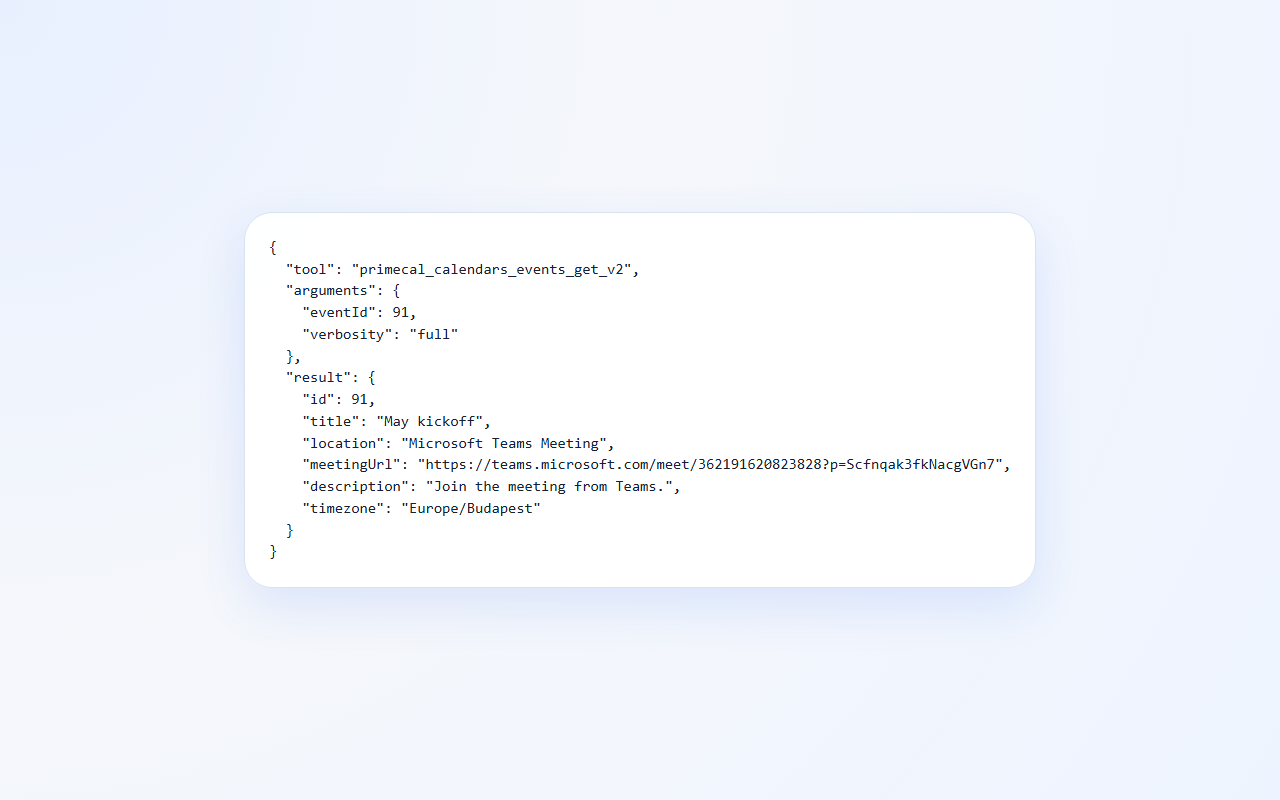
meetingUrl is nullable and represents the persisted normalized meeting link extracted at write or sync time.
Field reference:
meetingUrl- type:
string | null - set when PrimeCal extracts a supported provider link during ingest or sync
- remains
nullwhen the event has no supported meeting link - visibility follows normal event authorization rules
- type:
PrimeCal treats this field as sensitive event content and avoids logging the raw value at routine info level.
Example
{
  "id": 91,
  "title": "May kickoff",
  "startsAt": "2032-04-16T07:00:00.000Z",
  "endsAt": "2032-04-16T08:00:00.000Z",
  "startsAtLocal": "2032-04-16T09:00:00+02:00",
  "endsAtLocal": "2032-04-16T10:00:00+02:00",
  "allDay": false,
  "location": null,
  "timezone": "Europe/Budapest",
  "calendarId": 14,
  "calendarName": "May.B.Late Personal",
  "attendeeCount": 2,
  "organizerName": "May Organizer",
  "meetingUrl": "https://meet.google.com/abc-defg-hij",
  "sourceId": "google:calendar-1",
  "externalId": "ical-123"
}
Error Semantics
- If the event does not exist, PrimeCal returns a not-found MCP error.
- If the caller cannot access the event’s calendar, PrimeCal also returns the same not-found shape.
- This keeps cross-calendar information from leaking through error differences.
Screenshot Reference